Railways & Transportation
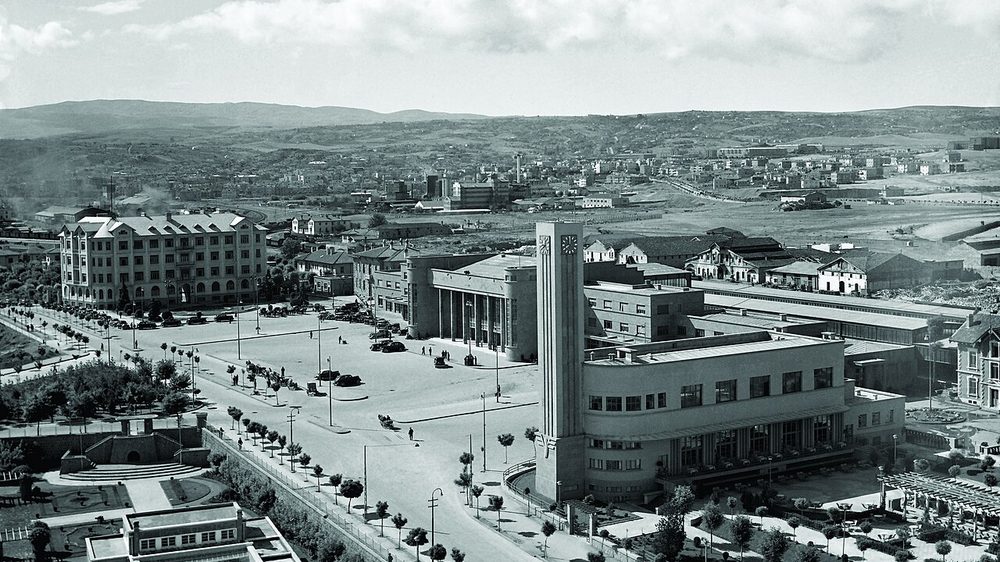
The railways built in Ottoman times were mostly in foreign hands and had been laid according to commercial interests. The Republic redefined both who owned these lines and where new ones would run.
Key Achievements
- New lines. Roughly 3,000 km of new railway was laid between 1923 and 1938; depending on the source the figure ranges from 2,800 to 3,300 km.
- Nationalisation (1924). The railways of Anatolia were bought from foreign companies and passed into state ownership.
- Eskişehir Locomotive Works. The works maintained and repaired locomotives and also served as a school that trained Turkish technical staff.
- Turkish contractors. After 1933 domestic firms took a growing share of railway construction.
- Expansion eastward. The line reached Kayseri (1927), Sivas (1930), Malatya (1931), Niğde (1933) and Diyarbakır (1935) in turn. Construction of the Sivas–Erzurum line began in 1933 and was completed in 1939, tying eastern Anatolia to Ankara.
- Cabotage Law (1926). By barring foreign ships from carrying goods and passengers between Turkish ports, the law secured full sovereignty over coastal shipping.
- Sivas Locomotive Repair Works (1939). Built for the maintenance and repair of steam locomotives and freight wagons, the facility is the core of today's TÜRASAŞ Sivas. Land expropriation began in 1936 and it opened in 1939; planning and groundwork took place in the Atatürk era, while the opening came after his death.
For Atatürk the railway was a symbol of both economic and political independence.
"Railways are a sacred torch that lights a country's way to civilization and prosperity."
— Mustafa Kemal Atatürk, opening speech to the Grand National Assembly, 1 November 1937The network inherited from the Ottomans was roughly 4,100–4,600 km. Adding the roughly 3,000 km of new line built between 1923 and 1938, the total network reached about 7,000–8,600 km by the end of the period. The "8,000 km" figure found in some sources refers to this total network size, not only the newly built portion.
Railway and Port Lines Taken into State Hands
The lines and ports held by Ottoman concession companies passed into state ownership in two stages.
- Haydarpaşa Port and Quay (1924). Istanbul's main cargo port was bought from the Ottoman-era concession company.
- Haydarpaşa–Ankara Railway (1924). Anatolia's main trunk line was taken over from the Anatolian-Baghdad Railway Company.
- Eskişehir–Konya line (1924). The Central Anatolian link was nationalised in the same purchase package.
- Arifiye–Adapazarı line (1924). The branch tying the Sakarya region to the main line also passed to the state with this package.
- Mersin–Tarsus–Adana line (1924). The export corridor of the Çukurova was bought after the Chester concession talks collapsed.
- Manisa–Bandırma line (1934). The line linking the northern Aegean to the main network was nationalised.
- İzmir–Afyon line (1935). The line connecting the Aegean interior to İzmir was transferred from private capital to the state.
- Aydın Railway Company (1936). The British-owned company running the İzmir–Aydın–Dinar route was taken over.
- Şark Railways Co. (1937). The part within Türkiye of the foreign-owned network covering the Rumeli and Edirne connections was nationalised.
The nationalisations were pragmatic rather than ideological: the government repeatedly stated that it was not opposed to foreign capital. Indeed, while companies were being nationalised between 1934 and 1938, 32 new foreign companies began operating in Türkiye.