1923 – 1932 · Urbanism & Planning
Ankara: A Planned Capital
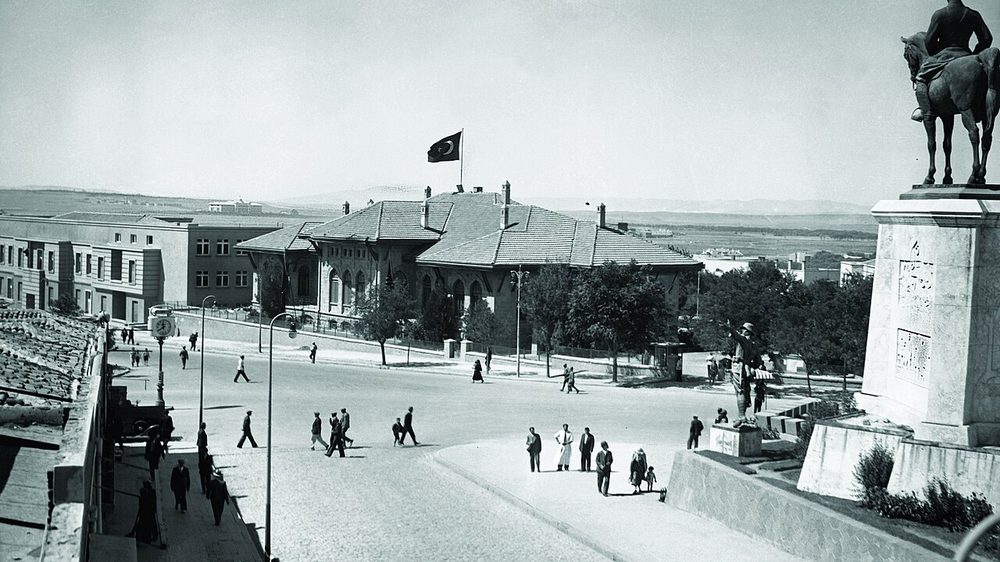
When Ankara was proclaimed capital on 13 October 1923 it was an Anatolian city with limited infrastructure. The Republic did not leave the capital to grow at random: it tried to steer its development first with plans by foreign specialists and then through an international competition. It was the Republic's first major test of urban engineering.
Planning Stages
- The Lörcher Plan (1924–25). Carl Christoph Lörcher prepared two plans: one for old Ankara in 1924 and one for new Ankara in 1925. The 1925 plan envisaged a grid layout with gardens and houses of no more than two storeys. It was partly implemented, but by 1927 it was judged inadequate because of rapid population growth.
- The capital competition (1927–28). Ankara Municipality obtained preliminary reports from Hermann Jansen, Joseph Brix and Léon Jaussely. In 1928 a private competition restricted to these three specialists was held and Jansen's proposal was adopted.
- The Jansen Plan (approved 23 July 1932). The plan proposed Atatürk Boulevard as the city's main spine, turned the city's principal direction of growth south and envisaged new development in three directions around the old city. Jansen travelled between Ankara and Berlin until 1939 while the plan was being implemented; one source says he stayed in Türkiye until 1938.
Institutions Founded in the Capital
- Gazi Forest Farm (5 May 1925). Today's Atatürk Forest Farm (see the Agriculture card).
- Map Directorate (2 May 1925). The mapping organisation, with roots in 1895, was reorganised under the Republic by Law No. 657 as the Harita Umum Müdürlüğü. It settled in Cebeci and its headquarters building opened in 1927.
- Rasâdât-ı Cevviye Institution (12 November 1925). Founded in Etlik, it was Türkiye's first meteorological institution (see the Measurement, Time & Scientific Infrastructure card).
- Ankara Law School (1925) and Higher Agricultural Institute (1933). Together they formed the core of the capital's higher education (see the Education card).
- Ankara automatic telephone exchange (11 September 1926). It was Türkiye's first automatic exchange (see the Communications card).
- Central Hygiene Institute (1928) and Ankara Numune Hospital. The hospital's main building was built in 1928–1933; together they formed the capital's health infrastructure (see the Public Health card).
1923
Capital proclaimed (13 October)
1928
Competition won by Jansen
1932
Jansen Plan approved
Limits
Planned growth was partly eroded by rapid population increase and deviations in implementation; how far the Jansen Plan was actually carried out is debated in the academic literature. This card describes the plan itself and the institutions founded alongside it; the city's later development is outside its scope.
Source: Ankara University OpenCourseWare, "Hermann Jansen (1869–1945), German Architect and Urban Planner"; Goethe-Institut Ankara, "The Making of a Capital"; DergiPark, "Urban Green Space in Jansen's Plans for the Capital" (academic article); General Directorate of Mapping institutional history (harita.gov.tr); Turkish State Meteorological Service, "History of Turkish Meteorology" (mgm.gov.tr). Plan dates may differ by a year between sources (competition 1927 or 1928).