Energy & Electrification
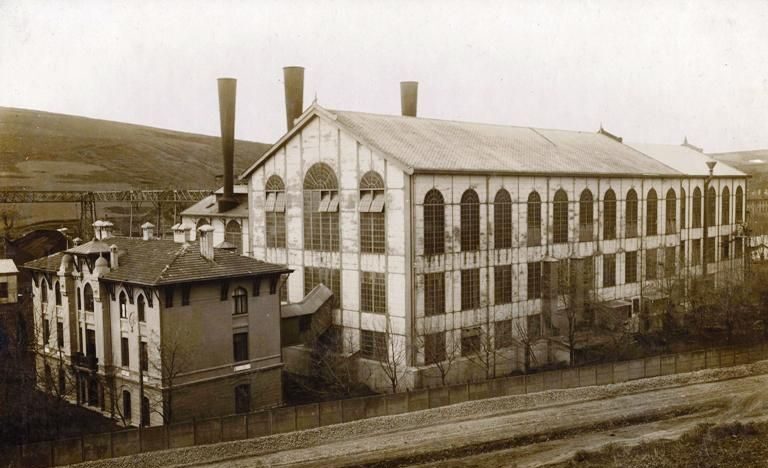
The invisible foundation of industrialisation was energy. In the Republic's first years electricity generation was concentrated in a few large cities and in the hands of foreign-owned concession companies; the rest of the country was largely without power.
Institutional Steps
- Electrical Power Resources Survey Administration (EİEİ, June 1935). This state body took on the survey of water power and energy resources and the planning of electricity generation and distribution.
- Etibank (June 1935). It was established as a state bank financing mining and energy production together.
- Silahtarağa Power Station. The operation of Istanbul's first city-scale power plant, built in 1914, was held by a foreign-owned company. The company was bought out and nationalised by the state in 1937 and passed to the Electricity General Directorate under the Ministry of Public Works; on 1 July 1938 it was handed over to İETT (Istanbul Electricity, Tramway and Tunnel Operations), which the Istanbul Municipality had established.
- Taking over concessions. In the 1930s foreign-owned electricity-distribution concessions were gradually transferred to the state.
- Ankara Electricity and Gas. The capital's electricity generation and gas distribution infrastructure was bought from the foreign operator and passed into state ownership.
- Istanbul Tramway Company. The city's tramway operation was expropriated in the late 1930s and brought under İETT.
- Istanbul Tunnel Company. The Karaköy–Beyoğlu Tunnel, one of continental Europe's first underground transit lines, was taken out of foreign concession and handed to a state operation.
- İzmir Tramway and Electricity Co. The foreign-owned company that ran İzmir's electricity generation and tramway was nationalised.
- İzmir Water Co. The operation of İzmir's drinking-water distribution network was taken into state ownership.
- Trabzon Visera (Işıklar) Hydroelectric Plant (1929). Construction began in 1926; the roughly 1 MW plant is the eastern Black Sea's first run-of-river hydroelectric station and is cited as one of the first hydro plants of the Republican period. Sources differ on whether it began as a municipal or a private venture.
- Ankara and Adana Electricity Company (5 July 1939). Law No. 3688 had part of the companies' shares bought by the government. This continued the nationalisation process built on the purchase right that the Municipal Law No. 1580 of 1930 gave municipalities over concession companies. The process began in the Atatürk era and was completed after his death.
- Bursa and Mersin Electricity Companies (5 July 1939). Under Law No. 3689 the shares of the electricity companies of two industrial and port cities were bought by the government. Municipalities were afterwards granted the right to build and operate plants within their own boundaries.
The tradition of survey and planning that EİEİ established later formed the basis of institutions such as DSİ and TEK.
The Euphrates–Tigris Basin: Early Hydrological Surveys
Once EİEİ was founded its remit was not confined to electricity generation; all of Türkiye's river basins came within the scope of its surveys. In the late 1930s the first systematic studies of hydraulic and irrigation potential began on the Euphrates and Tigris. These early surveys remained limited by the means of the time, but the institutional knowledge and methodology were passed to the State Hydraulic Works (DSİ), founded in 1954. The Keban Dam (1974) and Atatürk Dam (1992) that DSİ built in the following decades are distant descendants of this survey tradition. Note: the Southeastern Anatolia Project (GAP), launched in 1977, is not a product of this era, but it was built on the technical foundation created by EİEİ's basin-based survey approach.