Latin Alphabet & Scientific Language Reform
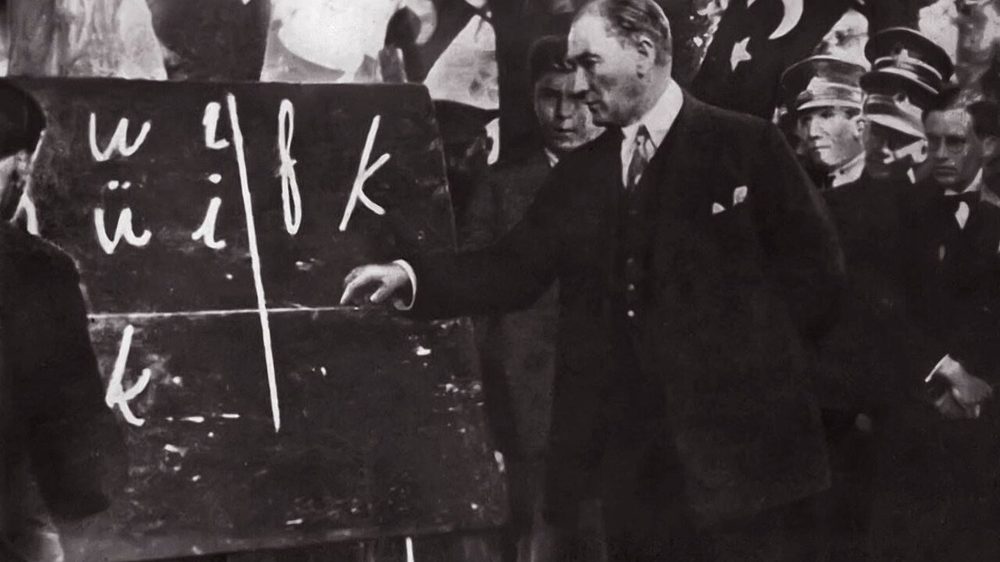
The alphabet revolution of 1928 was more than a change of writing system; it also opened the door to Türkiye's integration with the international scientific world.
Key Steps
- Latin alphabet (1928). The switch from the Arabic to the Latin alphabet gave Türkiye a script compatible with printing presses, the telegraph and international scientific publications.
- Turkish Language Association (1932). Originally called the Turkish Language Research Society, it was founded to standardise the language and research the origins of Turkish.
- Turkish Historical Society (1931). Originally the Turkish Historical Research Society, it provided the institutional framework for scientific historical method.
- Sun Language Theory. This linguistic venture, which held Turkish to be the mother of the world's languages, remains controversial; it is still regarded as a pioneering example of the era's scientific curiosity.
- Nation Schools. A mass literacy campaign was launched on the basis of the new alphabet.
According to an account based on Falih Rıfkı Atay's memoir Çankaya, when a 5-year transition period was proposed Atatürk said "either it happens in three months, or not at all." With the launch of the Nation Schools, parliament formally gave Atatürk the title "Başöğretmen" (Head Teacher) on 24 November 1928; he toured villages and taught in person.
The Scale of the Nation Schools Campaign
The campaign, which effectively began on 1 January 1929, opened 60,373 courses (class A and B) across the country by 1935. A total of 2,486,845 people enrolled in them, and 1,358,001 passed the examination and graduated, roughly 55% of those enrolled. Why the remaining 45% or so did not finish (seasonal farm work, a lack of transport and teachers) and which provinces took part most heavily are examined in province-level academic studies (for example the separate articles on Malatya, Kayseri and Sinop); this page does not offer that level of province-by-province detail.